 You Are Here:
Improve Efficiency: Operating Tips for a Fully Automated Micro-Volume Liquid Filling and Sealing System
 Updated: 2026-01-24
 Views: 255
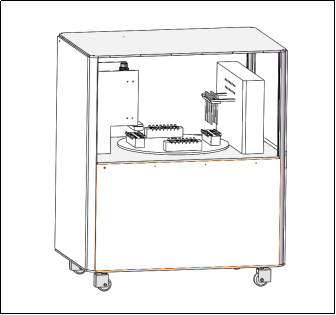
Fully Automated Micro-Volume Liquid Filling and Sealing Systemis intelligent packaging equipment that integrates precision metering, automatic filling, and immediate sealing. It is designed for industries with demanding dosage-accuracy and hygiene requirements, including pharmaceuticals, biological reagents, cosmetics, food additives, and chemicals [preceded by an unclear modifier in the source]. It automates the entire process from bottle infeed, volumetric filling, and cap placement (or press-capping/screw-capping) through sealing (such as aluminum-foil heat sealing, induction sealing, or vacuum sealing) and discharge, significantly improving production efficiency, product consistency, and sterility assurance.
It generally uses a high-precision peristaltic pump, ceramic plunger pump, or servo-controlled piston pump as the metering unit. Its filling range covers 0.1 mL to 100 mL, with repeatability within ±0.5%, meeting precision dispensing needs for micro-volume liquids such as vaccines, diagnostic reagents, essential oils, and serums. A touchscreen human–machine interface (HMI) and PLC control system support multiple parameter presets, automatic counting, no-bottle/no-fill control, anti-drip operation, and fault alarms for simple, stable, reliable use.
Fully Automated Micro-Volume Liquid Filling and Sealing Systemoperating method:
1. Equipment preparation and inspection:
Place the equipment on a level workbench and ensure that it is stable.
Connect the power plug and compressed-air supply if the equipment requires one.
Inspect all components for damage, including the filling head, sealing assembly, and conveyor.
Clean the equipment, especially the filling head and sealing area, to prevent product contamination.
2. Parameter settings:
Adjust equipment parameters according to product properties and filling requirements, including filling speed and volume and sealing temperature and time.
For micro-volume filling, set the fill volume precisely to ensure accuracy in every cycle.
If the equipment supports multiple bottle types or sealing methods, select and configure them according to the actual application.
3. Product loading:
Pour the liquid to be filled into the equipment hopper, ensuring an adequate and uniform supply.
Place empty bottles or containers on the conveyor and ensure that they enter the filling and sealing area smoothly.
If automatic capping or sealing is required, load the corresponding caps or sealing material into the equipment.
4. Start operation:
Turn on the equipment's power switch and start it.
The equipment automatically completes filling, capping if required, and sealing. During operation, closely monitor its status to ensure that no abnormal condition occurs.
If batch operation is supported, load multiple bottles or containers at once and allow the equipment to complete the entire filling and sealing process automatically.
5. Finished-product collection and equipment cleaning:
After filling and sealing, finished products exit through the discharge outlet. Collect them promptly and place them in the designated location.
After all bottles or containers have been filled and sealed, switch off the equipment and disconnect the compressed-air supply if used.
Clean the equipment, including remaining product in the hopper and residue on the filling head and sealing area. This keeps it clean and hygienic and extends its service life.