 You Are Here:
Key Considerations When Using a Cerebrospinal Fluid Pulsation Bioreactor
 Updated: 2023-12-21
 Views: 3170
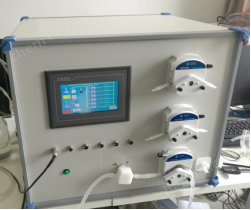
Cerebrospinal Fluid Pulsation Bioreactoris a device that simulates the biomechanical environment of cerebrospinal fluid pulsation for dynamic in vitro culture of cell–biomaterial composites, constructs artificial viable bone tissue, and records experimental data in real time. The resulting tissue-engineered bone has good biomechanical properties, biocompatibility, and bioactivity, providing a new method for constructing tissue-engineered bone for clinical research and application.
The instrument is used primarily for in vitro construction of bioactive bone tissue and research and applications involving biomaterial–cell compatibility, fatigue characteristics, and toxicity. It is suitable for product development and scientific experiments at universities, hospitals, research institutes, biological research centers, and biomaterials organizations.
When usingCerebrospinal Fluid Pulsation Bioreactor, pay attention to the following:
1. Biosafety: strictly observe biosafety requirements when designing and operating the bioreactor. Use aseptic technique and appropriate laboratory equipment to prevent contamination and cross-infection.
2. Select suitable reactants and catalysts: choose materials appropriate to the required biological reaction. Ensure that they are compatible with cerebrospinal fluid and the transport channel and cause no harmful effects in humans.
3. Control reaction conditions: appropriately control temperature, pH, oxygen supply, and other factors in the reaction chamber. Optimize them for the specific process and monitor and adjust them during operation.
4. Transport-channel design: the channel should offer good biocompatibility and adjustability. Ensure that it matches cerebrospinal fluid pulsation and stably transports substrates and products.
5. Monitoring and analysis: monitor and analyze the reaction in real time to evaluate efficiency and product quality. Use suitable techniques and instruments such as spectroscopy, chromatography, or mass spectrometry.
6. Ethics review: experiments or treatment in humans require ethics-committee approval and compliance with ethical principles, laws, and regulations.
7. Safety measures: wear protective gloves, a mask, and laboratory clothing and avoid direct contact with biological materials and chemicals while operating the bioreactor.
8. Waste disposal: dispose of waste and generated contaminants properly in accordance with environmental and laboratory-safety requirements.