 You Are Here:
The Dental Processing Production Line Comprises the Following Main Systems
 Updated: 2023-11-24
 Views: 3232
As technology advances, the dental processing industry continues to evolve. Traditional manual processing can no longer meet market demand, and modern dental processing lines have transformed dental manufacturing.
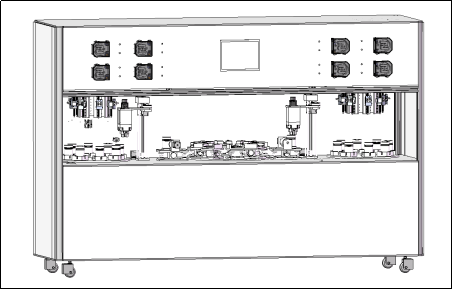
Dental Processing Production Lineis automated production equipment for manufacturing dental products such as crowns, bridges, and orthodontic appliances. It integrates multiple process steps and uses automation and digital technology for efficient, precise dental processing. Its main advantages include dramatically higher production efficiency and shorter lead times to meet urgent customer needs. Its high processing accuracy enables micrometer-level finishing to ensure product quality and fit. Automation also reduces manual operations and the effect of human factors on product quality.
Dental Processing Production Lineis a complex system consisting of several main structures:
1. Feed system: introduces raw materials such as metal bars or ceramic blocks into the production line. It may include feeders, belts, and conveyors to ensure materials enter the next process step in the specified sequence and at the specified speed.
2. Processing equipment: the core of the line, used to machine and form raw materials. Equipment varies by dental-product type and manufacturing process and may include CNC lathes, grinders, and inlay equipment. Each machine has specific functions and operating parameters to ensure precise processing quality.
3. Transfer system: moves workpieces between processing machines using belts, roller conveyors, robotic arms, or other methods. It must be efficient and accurate so workpieces flow in the correct sequence and position.
4. Inspection and quality-control system: detects and evaluates workpiece quality during processing. It may include sensors, vision systems, and measuring equipment for dimensions, shape, surface quality, and other parameters. Automated inspection reduces manual intervention and ensures consistent quality.
5. Control system: monitors and controls the entire line. It generally includes a computer control system and human–machine interface for setting processing parameters, collecting data, adjusting equipment, and displaying production status. Programming and sensor feedback enable automated operation and improve efficiency and consistency.
6. Discharge system: removes completed dental products from the line for packaging and sorting. It may include a conveyor, robotic arm, container, or packaging equipment. The system must meet efficiency, safety, and hygiene requirements for delivery to downstream processing or customers.